Why spreadsheets are slowing your factory down
For many manufacturers, spreadsheets start as a practical solution. A production schedule in Excel, a whiteboard on the factory wall, and a few shared files can work surprisingly well in the early stages of a business.
But as production grows, those systems often become harder and harder to manage.
More jobs are running at once. More people need information. Priorities change throughout the day. Customers expect faster updates. Suddenly the spreadsheet that once felt simple has become central to the entire operation.
And that is where problems start to appear.
One spreadsheet becomes several. Different teams create their own versions of information. The whiteboard is already outdated by lunchtime. Production meetings become focused on figuring out what is accurate rather than solving operational issues.
The factory stays busy.
But flow slows down.
The problem is not that spreadsheets are bad tools. The problem is that manufacturing is dynamic, while spreadsheets are static. Production changes constantly throughout the day — materials arrive late, urgent jobs appear, machines stop unexpectedly, customers make changes, and teams move between tasks.
Trying to manage all of that manually creates friction.
Managers walk the workshop asking for updates. Staff stop trusting the information because they know it is incomplete. Teams spend time copying information between systems, rewriting schedules, and chasing answers instead of moving work forward.
Over time, administration quietly replaces improvement work.
Some of the most capable people in manufacturing businesses end up spending large parts of their day maintaining spreadsheets, updating whiteboards, or coordinating disconnected information. The people who should be improving throughput, reducing bottlenecks, and solving operational problems become human integration systems instead.
That hidden operational drag is expensive.
Not just because of delays or mistakes, but because it consumes attention. Every hour spent managing information manually is an hour not spent improving the business itself.
This is where real-time operational visibility changes things dramatically.
When teams can see live information across production, decisions happen faster. Problems are identified earlier. Bottlenecks become visible before they turn into delays. Conversations become clearer because everyone is working from the same source of truth.
The goal is not simply to “go digital.”
The goal is to remove friction.
Many manufacturers avoid operational software because they associate it with large, complicated ERP systems that are expensive to implement and difficult for teams to use. That concern is understandable. Historically, many systems were designed around accounting structures and reporting requirements rather than practical factory flow.
But modern manufacturing systems are increasingly focused on visibility, workflow, and ease of use.
Sometimes the biggest improvement is surprisingly simple: giving the entire team access to accurate, live information without relying on someone to manually update a spreadsheet or rewrite a whiteboard.
Because the real cost of spreadsheets is rarely the spreadsheet itself.
It is the opportunity cost.
When your team spends less time chasing information, they gain more time to improve processes, solve issues, support customers, and innovate. The factories that improve fastest are usually not the ones with the biggest systems or the most complexity. They are the ones where information flows clearly, decisions happen quickly, and teams can focus on the work that actually matters.
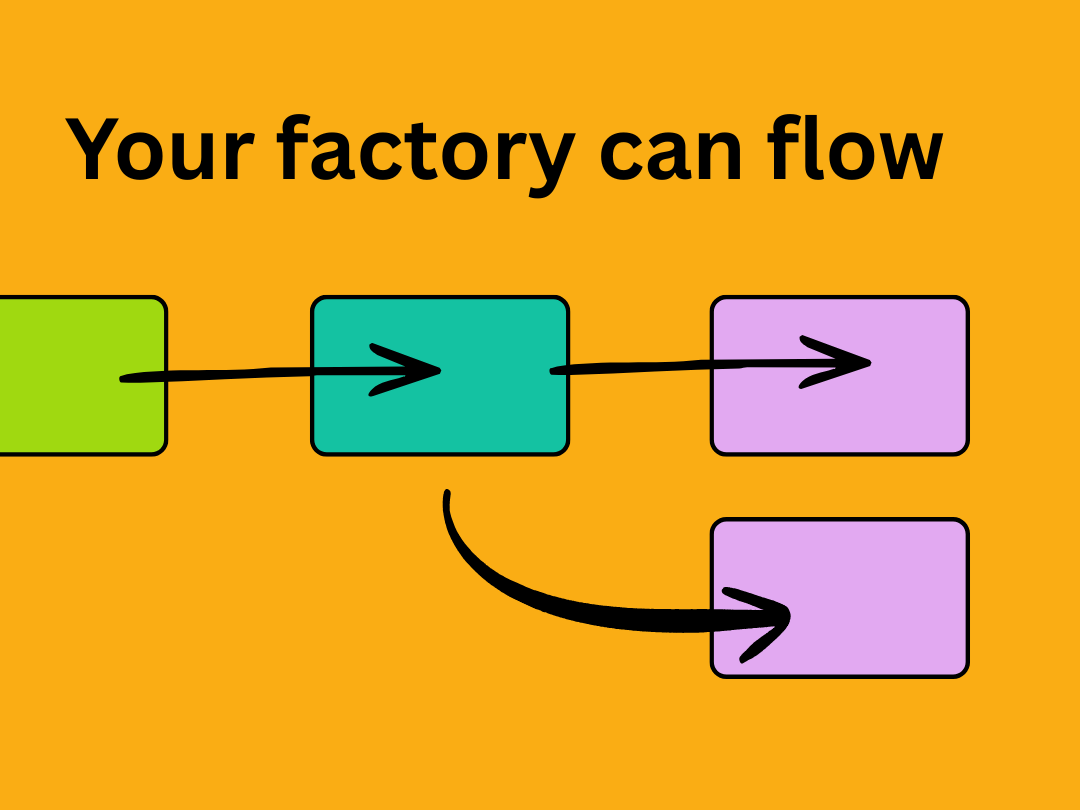
Because when information flows properly, production usually does too.
Takticians is built to make your factory flow.